

When treatment stops working, the goal changes. It is no longer about cure. It is about comfort, and peace, and time together.
Most people want to be at home for this. Not in a ward, with visiting hours and machines beeping.

Pain is the thing families fear most, and the thing they feel least able to manage.
We follow the doctor's plan exactly, watch closely for changes, and report them the same day.
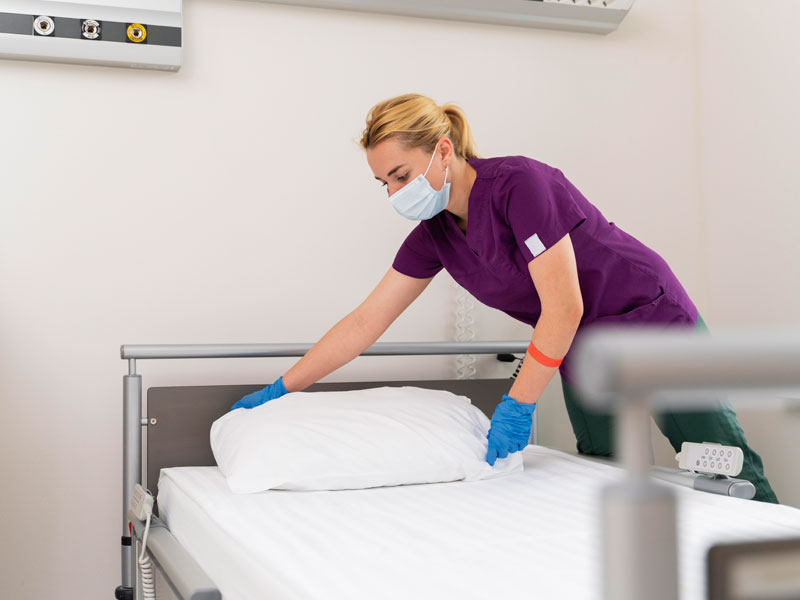
Bathing, cleaning, changing, turning. Done gently, done privately, done without hurry.
Our carers keep the patient clean, comfortable and covered. Bedsores are prevented, not treated. Small things, done properly, are most of what comfort actually means.
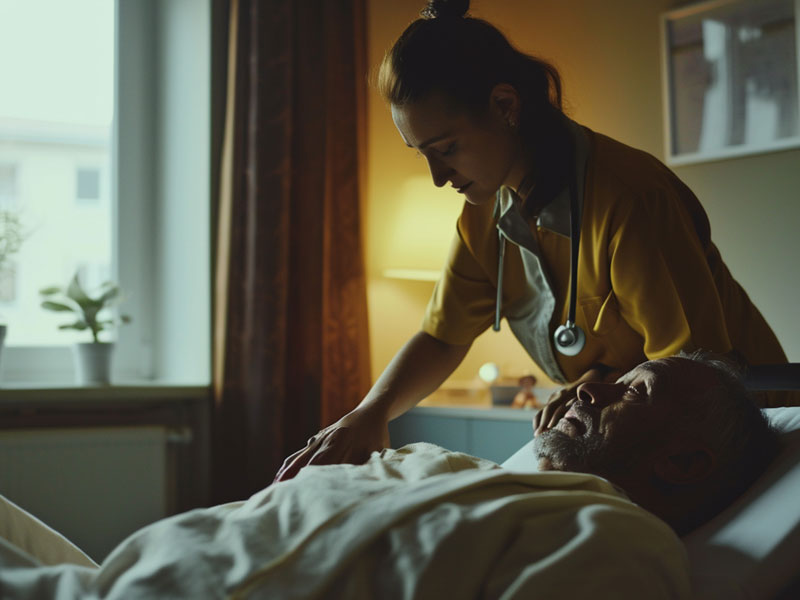
Nights are the hardest part, and the part families cannot sustain for long.
Our carer stays awake so the family can sleep. Someone is always in the room. Nobody has to lie awake listening.
Palliative care is not only for the patient.
We take the physical work — the lifting, the cleaning, the night watch — so a son can be a son again, and a wife can sit and hold a hand instead of changing a bedsheet.
That is the point of it.
No. Palliative care is about comfort and quality of life, and many patients receive it alongside ongoing treatment.
We follow the treating doctor's plan exactly and watch closely for changes.